 Sky
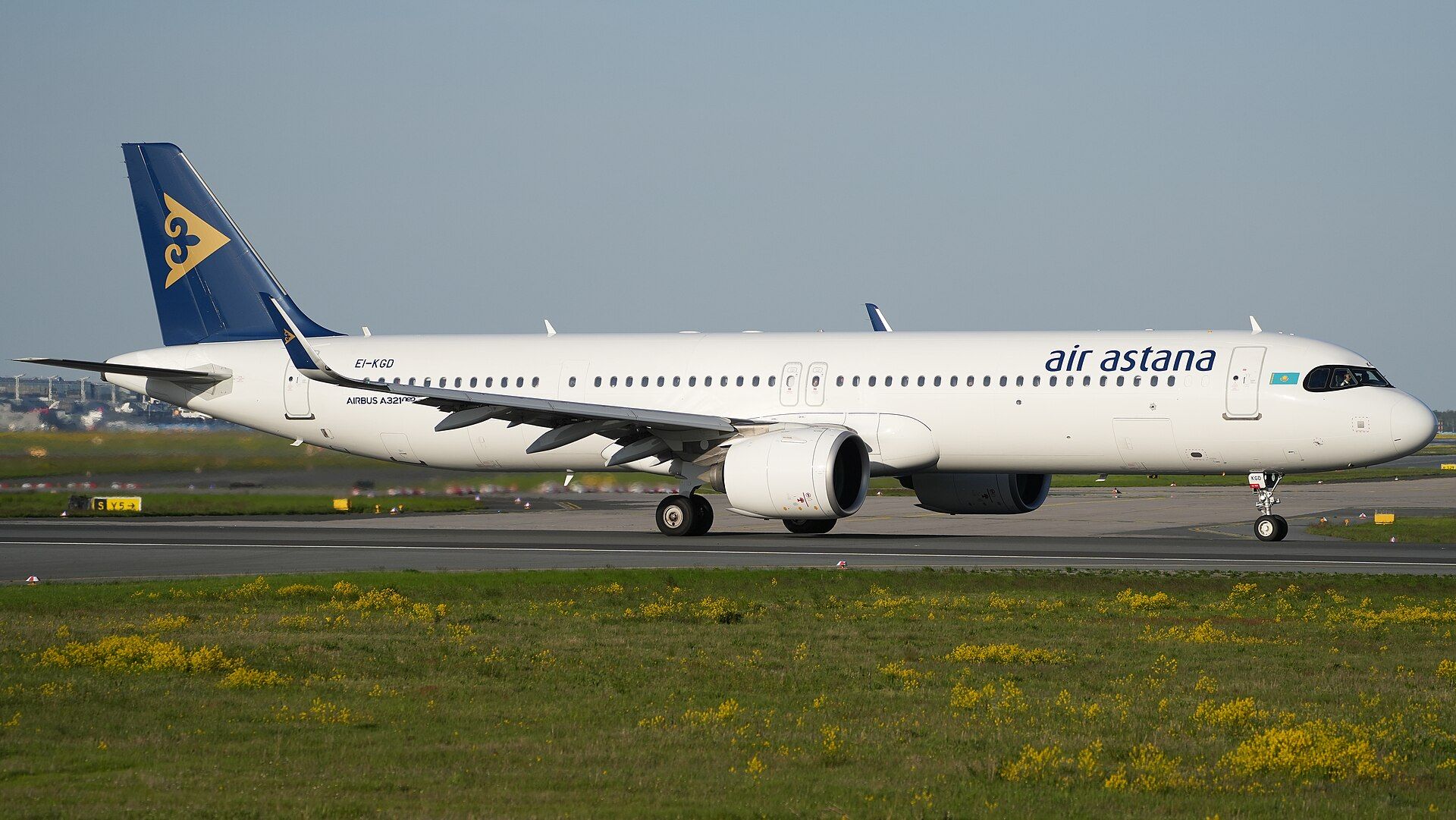
Air Astana has entered a new chapter in its corporate history, with Ibrahim Canliel formally assuming the chief executive role on April 1, 2026, succeeding Peter Foster, the long-serving leader who shaped the Kazakh flag carrier into one of Central Asia's most closely watched success stories. The handover is more than a routine management transition. It marks the passing of the baton at a carrier that has, over two decades, evolved from a state-backed startup into a profitable, publicly listed airline with a reputation for operational discipline and an unusually ambitious long-haul strategy for its size.
Canliel inherits an airline in robust health but at a strategic inflection point. Air Astana's dual-brand structure, comprising the full-service Air Astana and the low-cost FlyArystan, has given it reach across price segments in a market where geography is both an asset and a constraint. Landlocked between Russia, China and the Caspian, Kazakhstan sits on natural east-west corridors, yet its carriers must work harder than most to build traffic beyond regional and ethnic-VFR demand. Foster's tenure was defined by navigating that puzzle, including the delicate task of maintaining connectivity through the pandemic and the subsequent closure of Russian airspace, which forced costly reroutings on key European services.
The centerpiece of the new chief executive's agenda is the carrier's long-haul ambitions, with the United States at the top of the list. Air Astana has long eyed nonstop links to North America, a prospect made more credible by the arrival of the Boeing 787 Dreamliner, an aircraft the airline has ordered to replace and expand its widebody fleet. The Dreamliner's range and fuel efficiency are central to the business case: they would allow the carrier to serve destinations such as New York or other US gateways from Almaty without the payload penalties that constrain older equipment. For a carrier whose long-haul network has leaned on fifth-freedom and connecting traffic through hubs, a credible US route would represent a strategic upgrade rather than a mere addition.
That said, the path is not straightforward. US services demand rigorous regulatory approvals, bilateral traffic rights and, crucially, sufficient high-yield demand in both directions. Air Astana will need to cultivate corporate and diaspora traffic, and it will face established competitors routing Central Asian passengers through Gulf, Turkish and European hubs. The Dreamliner order is therefore best read as an enabling investment rather than a guarantee of success. Its timing, delivery schedule and financing terms will determine how quickly the airline can translate ambition into schedules.
Beyond North America, the new leadership faces a familiar set of industry pressures. Supply-chain constraints continue to delay aircraft deliveries across the sector, while engine maintenance bottlenecks and rising labor costs weigh on margins. Air Astana's fleet plan, which blends Airbus narrowbodies with the incoming 787s, must be executed with precision to avoid capacity gaps on trunk routes. The airline's low-cost arm, FlyArystan, meanwhile, remains a growth engine domestically and regionally, and its continued expansion will test the group's ability to manage brand separation without cannibalizing yields.
For the wider industry, the transition is a useful test case. Few carriers of Air Astana's scale have managed to combine consistent profitability, a public listing and genuine long-haul aspirations. If Canliel can deliver on the US route and integrate the Dreamliner smoothly, the airline could strengthen its position as a bridge between Europe and Asia, and as a credible alternative to Gulf hubs for certain traffic flows. Conversely, delays or overreach could expose the limits of a strategy built on geography and efficiency rather than scale.
The outlook is cautiously positive. Air Astana enters the Canliel era with a clear fleet roadmap, a diversified brand portfolio and a management team steeped in the airline's culture. The next 18 to 24 months will be decisive: regulatory milestones for US services, the first Dreamliner entering commercial rotation, and evidence that the group can grow without eroding the cost discipline that underpinned its reputation. For a carrier that has repeatedly punched above its weight, the challenge now is to convert ambition into durable network strength.
Comments (0)
No comments yet. Be the first to share your thoughts.