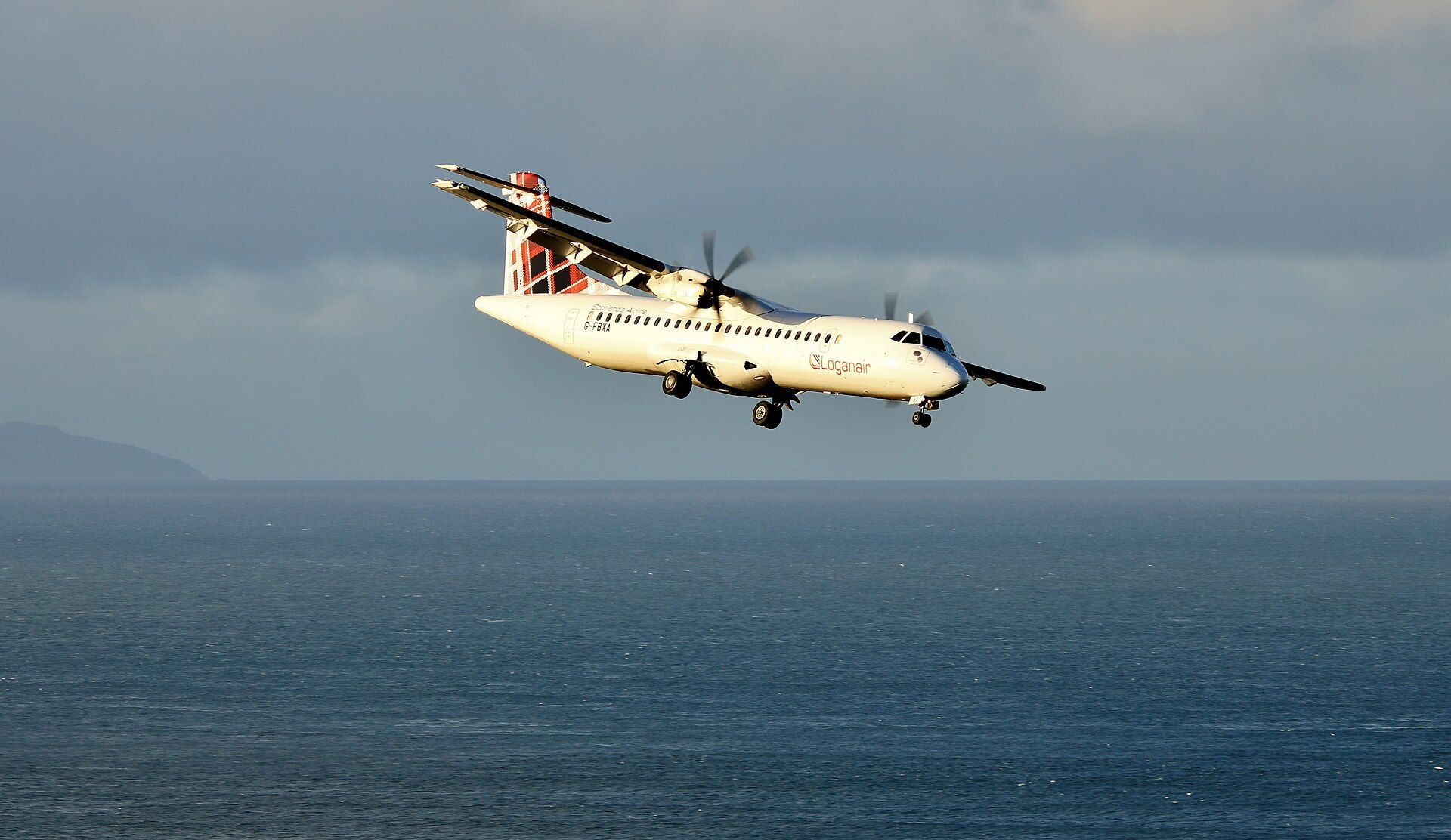
Bird strikes are a persistent threat in aviation, causing millions of dollars in damage annually and occasionally leading to catastrophic accidents. While much attention focuses on jet engines, turboprop aircraft like the ATR 72 face distinct challenges and benefits due to their design. The ATR 72, a twin-engine turboprop ubiquitous in regional aviation, is known for its two massive propellers. But how does its design handle the risk of bird strikes?
The ATR 72's high-wing configuration places its engines and propellers well above the fuselage, reducing the likelihood of ingesting birds during ground operations and low-altitude flight. This contrasts with many jets, where engines are mounted under the wings, closer to the ground. The turboprop's propellers are also large and rotate at relatively low speeds compared to jet fans, which can affect the severity of a strike. However, the propellers themselves are not immune; a bird hitting a propeller blade can cause significant damage, potentially leading to blade failure and engine shutdown.
Historically, bird strikes have been a concern since the early days of aviation. The ATR 72, introduced in 1989, was designed with lessons from previous turboprop aircraft. Its engines, typically Pratt & Whitney Canada PW100 series, are housed in nacelles that incorporate some bird strike protection. The propeller blades are made of composite materials and are designed to withstand certain impacts, but they are not indestructible. In the event of a bird strike, the pilot's priority is to maintain control and land safely, often using the remaining engine.
Regulatory standards, such as those from the FAA and EASA, require engines to withstand bird ingestion without catastrophic failure. For turboprops, the focus is on the propeller and engine combination. The ATR 72's engines are certified to ingest small birds without losing more than a certain percentage of thrust, and to handle larger birds with potential shutdown but without hazardous consequences. The aircraft's systems, including its fuel and electrical systems, are designed with redundancy to cope with single-engine scenarios.
Industry implications are significant. Regional airlines operating the ATR 72 often fly at lower altitudes where bird activity is higher, especially near airports and along migratory routes. The aircraft's design mitigates some risks, but operators must implement rigorous bird strike avoidance programs, including radar detection and habitat management. The ATR 72's safety record is generally good, but incidents like the 2019 crash of an ATR 72 in Canada, where a bird strike was a factor, highlight the ongoing challenge.
Looking ahead, advancements in materials and design could further enhance bird strike resilience. Composite propeller blades with improved impact resistance are being developed. Additionally, predictive analytics and real-time bird tracking may help pilots avoid high-risk areas. The ATR 72's successor, the ATR 72-600, incorporates some of these improvements, but the fundamental design remains similar. As aviation continues to grow, especially in regions with diverse bird populations, the balance between aerodynamic efficiency and safety will remain crucial.
In conclusion, the ATR 72's turboprop design offers inherent advantages in bird strike risk management, particularly due to its high-mounted engines and robust certification. However, no aircraft is immune, and continued vigilance, training, and technological innovation are essential to mitigate this persistent hazard.
Comments (0)
No comments yet. Be the first to share your thoughts.