 Sky
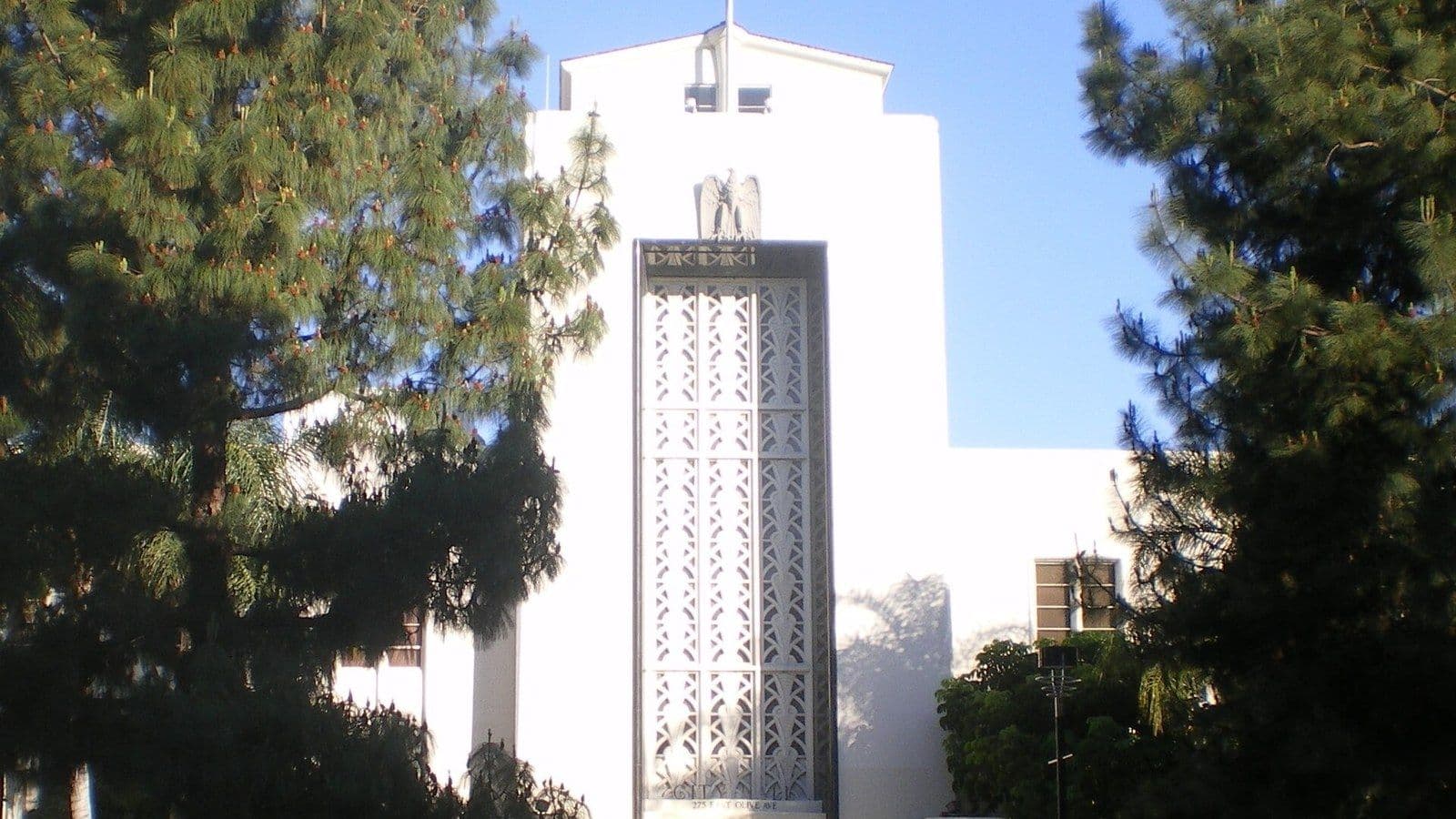
The phrase "ATC Zero" is one of the most consequential terms in American aviation, and yet it rarely reaches the public ear. It describes a situation in which an air traffic control facility is unable to provide any service at all — not reduced staffing, not a slower flow, but a complete cessation of its core function. On a single night this week, Hollywood Burbank Airport's tower crossed that threshold twice, leaving flight crews to coordinate their own takeoffs and landings in the dark over one of Southern California's busiest and most constrained airfields.
The mechanics of what happened are straightforward, and that is precisely what makes them unsettling. When a tower declares ATC Zero, the responsibility for separation shifts to the flight deck. Pilots broadcast their intentions on a common traffic advisory frequency, listen for other aircraft, and negotiate the sequence among themselves — the procedural rhythm familiar to aviators at small, uncontrolled general aviation fields, but almost unheard of at a commercial airport handling Southwest Airlines 737s and regional jets alongside corporate traffic. Burbank sits in a densely packed basin beneath the Los Angeles Class B airspace, hemmed in by terrain and by the traffic flows of LAX, Van Nuys, and a cluster of other facilities. It is not airspace that forgives improvisation.
The immediate cause was staffing, as it almost always is. The Federal Aviation Administration has been candid in recent years that its controller workforce has not kept pace with attrition, training backlogs, and the retirements that have long been forecast. Facilities across the country have operated for extended periods at reduced capacity, and "ATC Zero" declarations — once a rarity reserved for emergencies like a power failure or a facility evacuation — have become a recurring feature of the system's worst nights. Two such events at the same tower within hours suggests not a single unlucky absence but a roster stretched to its breaking point, where one or two unavailable controllers can tip an entire facility into zero service.
For airlines, the operational consequences cascade quickly. Burbank's runway geometry and noise-abatement procedures already make it a demanding airport; without tower control, arrival rates collapse, holding becomes the default, and diversions to Ontario, Los Angeles, or even further afield become the prudent choice. Crews are trained for this contingency, and the system's redundancy — pilots talking to pilots, with approach control and center potentially providing top-down service where possible — is real. But training and reality diverge under workload. A self-announcing, self-separating environment at night over a mountainous basin raises the margin for error in ways that no amount of professionalism fully erases.
There is a broader industry dimension here that deserves attention. The United States operates the largest and safest air traffic system in the world, and its safety record is not an accident — it is the product of layered procedure and a workforce that has historically been resourced to match demand. The past several years have eroded that alignment. Pandemic-era disruptions accelerated retirements, training pipelines slowed, and the hiring surge now underway takes years to convert recruits into certified controllers. In the interim, the system runs on overtime and goodwill, and the public sees the results only when a tower goes dark.
Passengers, for their part, rarely learn that their flight was sequenced by a colleague in another cockpit rather than a controller on the ground. That is arguably the most striking aspect of the Burbank episode: the system absorbed the shock, flights eventually moved, and the event receded into the operational log. But resilience that depends on crews compensating for absent infrastructure is a thin kind of resilience.
The outlook is mixed. The FAA's hiring and modernization efforts are genuine, and facility-level mitigation — flow programs, temporary top-down service from neighboring facilities, and better fatigue management — can reduce the frequency of zero-service events. Yet the underlying arithmetic of controllers versus traffic will not resolve quickly, and busy, terrain-constrained fields like Burbank will remain the places where the margin is thinnest. The honest conclusion is that ATC Zero at a commercial airport should be treated as a warning light, not a curiosity. Twice in one night is not a story about one tower's bad evening; it is a story about a system running close to its limits, and about pilots who, for a few hours, had to be their own controllers.