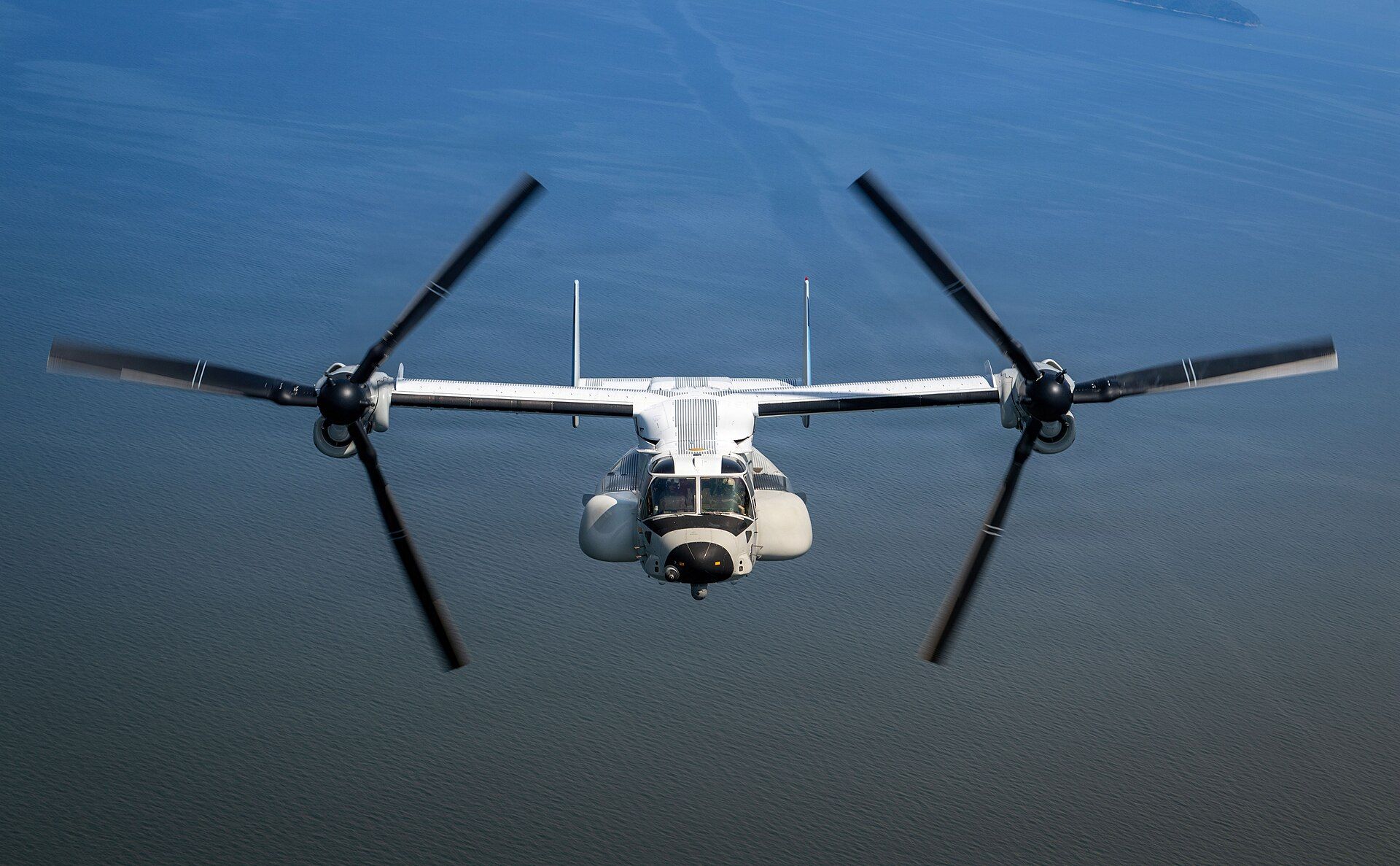
The U.S. Navy has officially transitioned its carrier onboard delivery mission from the aging C-2A Greyhound to the CMV-22B Osprey, ending more than five decades of fixed-wing turboprop service aboard aircraft carriers. The change represents one of the most significant logistics shifts for the service in recent memory, replacing a twin-engine design with a tiltrotor platform capable of both vertical takeoff and conventional flight.
For years, the C-2 Greyhound served as the primary link between land bases and carrier strike groups, ferrying mail, spare parts, high-priority cargo and passengers. Derived from the E-2 Hawkeye, the Greyhound offered range and payload capacity but required catapult launches and arresting gear recoveries, limiting it to carriers equipped for conventional fixed-wing operations.
The CMV-22B, a naval variant of the Bell Boeing V-22 Osprey, changes that equation. Its tiltrotor design allows it to land vertically on carriers and amphibious assault ships alike, while its greater fuel capacity extends its operational reach. The aircraft can also carry the F-35's power module, a critical capability for deployed squadrons that the Greyhound could not match.
The transition has not been without challenges. The Osprey's cabin is smaller than the Greyhound's, and its unpressurized fuselage limits how high it can fly comfortably with passengers. Maintenance demands and availability rates have also drawn scrutiny from lawmakers and watchdogs.
Still, Navy officials argue the CMV-22B delivers flexibility the C-2 could never provide, including the ability to operate from a wider range of ships and shore locations. As the last Greyhounds head to storage, the Osprey now stands as the sole dedicated carrier onboard delivery aircraft in the fleet.
Comments (0)
No comments yet. Be the first to share your thoughts.