 Sky
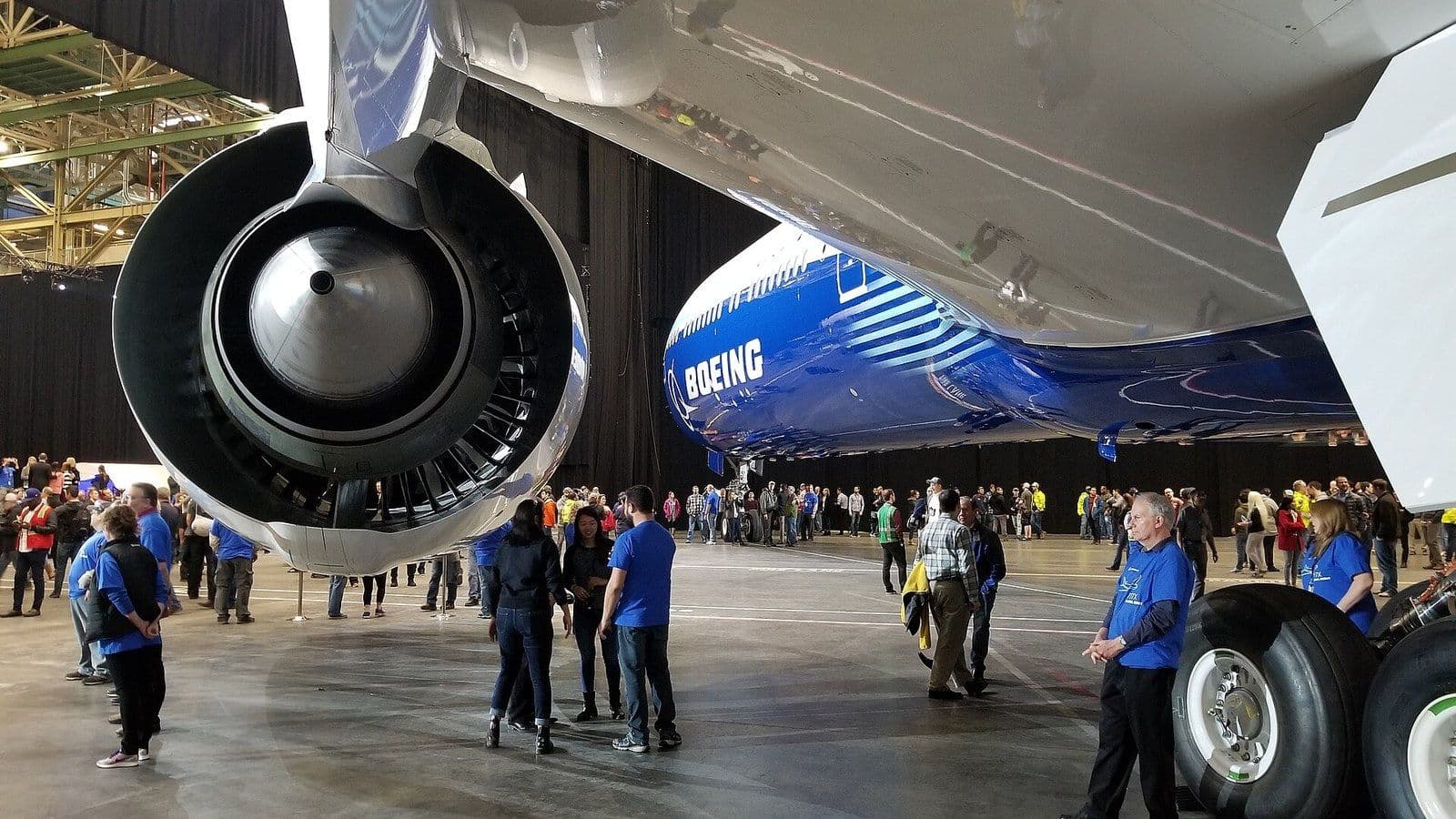
When Boeing's 777X finally enters service, it will do so powered by a single engine family: the GE9X, built by GE Aerospace. That exclusivity is unusual in commercial aviation, where twin-engine widebodies typically offer customers a choice between competing powerplants. The arrangement makes the GE9X one of the most consequential engines in the industry—and one of the most expensive.
Understanding the cost of the GE9X requires context. GE does not publish a list price, and engine pricing is among the most opaque corners of commercial aviation. Engines are rarely sold as standalone hardware. Instead, they are bundled into aircraft purchase agreements, covered by long-term maintenance contracts, and negotiated alongside spare parts, training, and warranty terms. The sticker price, when it surfaces, is a starting point for a much larger financial relationship.
Industry estimates place the GE9X in the range of roughly $40 million to $50 million per engine, though figures vary depending on configuration, contract structure, and who is doing the estimating. That is a striking number, but it is not the whole story. A twin-engine 777X therefore carries propulsion hardware worth a substantial fraction of the airframe itself, and the total cost of ownership over a multi-decade service life—driven by fuel burn, maintenance, and overhaul cycles—dwarfs the acquisition price.
Why does the GE9X command such a premium? The engine is a technological showcase. It features a massive fan measuring approximately 134 inches in diameter, the largest ever fitted to a commercial jet engine, housed in a composite fan case. Its 16-blade composite fan and advanced high-pressure compressor and combustor designs are engineered to deliver a bypass ratio and overall pressure ratio that push the boundaries of what turbofans can achieve. The result is thrust in the region of 100,000 pounds and, crucially, double-digit improvements in fuel efficiency and emissions relative to the GE90 engines that power the current 777.
Those efficiency gains are the real product. For an airline, an engine is a fuel-burning asset, and a percentage point of specific fuel consumption translates into millions of dollars over a fleet's lifetime. The GE9X's economics are built around that calculus: a higher upfront cost justified by lower operating costs, reduced emissions, and compliance with tightening noise and environmental regulations.
The engine's exclusivity amplifies its strategic importance. Because the 777X has no alternative powerplant, the GE9X program is tightly coupled to the aircraft's commercial success. Delays in the 777X certification timeline have ripple effects on engine production and on the return on GE's investment. Conversely, a strong 777X order book translates directly into GE9X volume, which is why the engine's fortunes are watched as a barometer of the widebody market.
There is also a competitive dimension. Airbus offers the A350 with a choice of engines, and the rival narrowbody and widebody ecosystems are shaped by engine makers competing for exclusivity and market share. Rolls-Royce and Pratt & Whitney continue to invest heavily in next-generation architectures. The GE9X sets a benchmark that competitors must answer, particularly as the industry debates open-fan designs and other radical configurations for the next generation of aircraft.
For airlines, the practical question is not the price of an engine but the price of propulsion over time. Maintenance agreements, often structured as flight-hour or flight-cycle contracts, effectively shift risk between manufacturer and operator. The headline cost of a GE9X is therefore less a transaction price than an anchor for a decades-long service relationship.
Looking ahead, the GE9X will serve as a proving ground for technologies that will inform the next wave of engine development. Its composite fan, advanced materials, and efficiency targets offer lessons for whatever comes next—whether that is a further evolution of the turbofan or a move toward open-rotor concepts. The engine's cost, steep as it is, reflects the immense capital and engineering required to build the most powerful commercial jet engine in service. For the 777X, that investment is the foundation of its business case; for the wider industry, it is a signpost toward the efficiency-driven future of long-haul flight.