 Sky
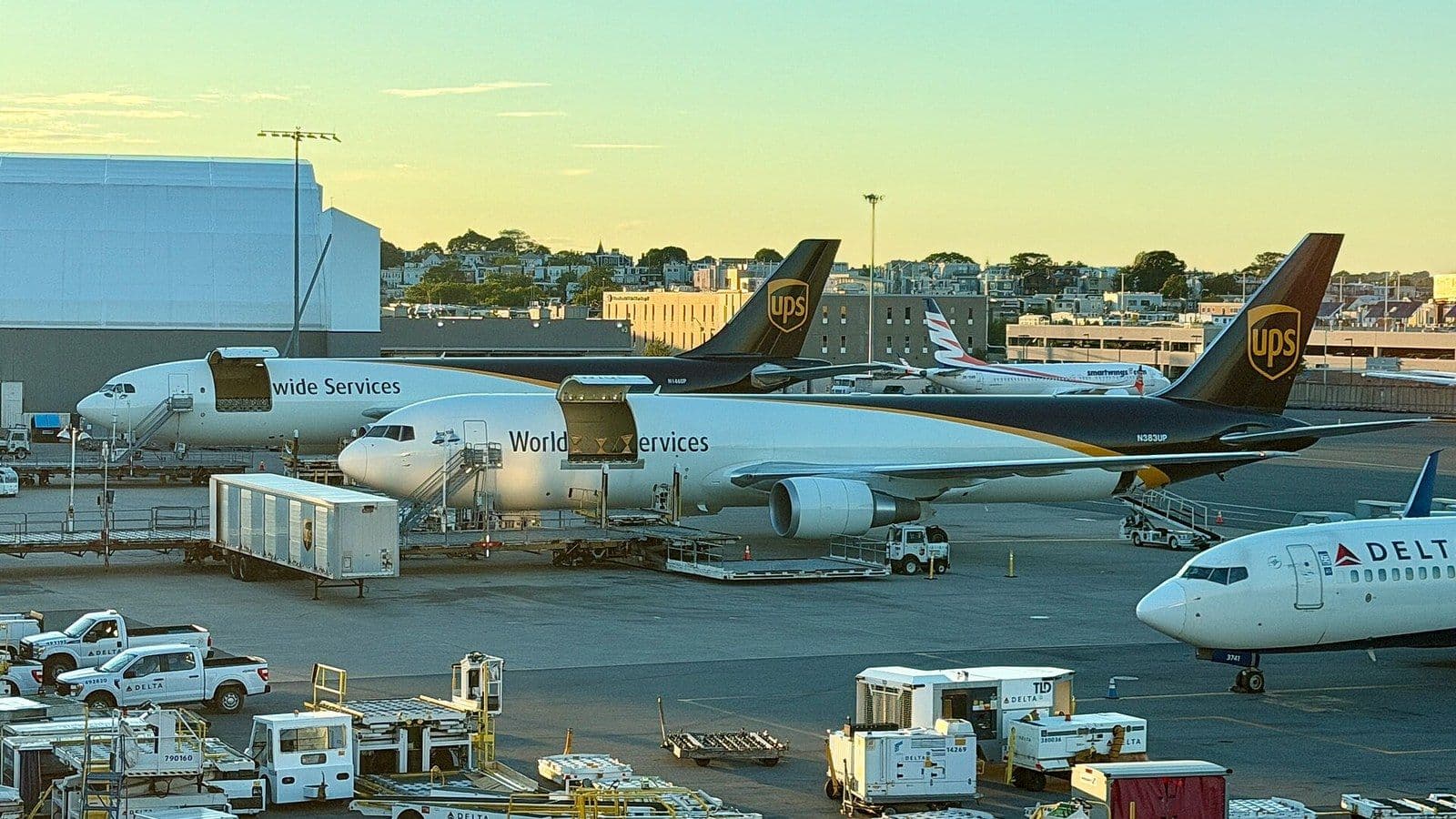
The images that emerged from Miami International Airport on the afternoon of the incident told a story that aviation safety specialists dread: a large cargo widebody, still on the ground and moving under its own power, in physical contact with a parked passenger narrowbody. The collision between a UPS Boeing 767 freighter and a Copa Airlines Boeing 737 occurred after the cargo aircraft taxied beyond its assigned clearance, bringing the two airframes into contact and prompting an emergency response. Two people were treated for minor injuries, a remarkably modest toll given the size of the aircraft involved and the confined geometry of an airport taxiway.
The sequence, as understood from initial reports, is deceptively simple. The UPS 767 was taxiing at Miami — one of the busiest and most complex airport layouts in the United States, with a dense mix of cargo ramps, international terminals and intersecting taxi networks. At some point the freighter travelled farther than its instructions permitted, closing the gap with the Copa 737. The resulting impact was enough to be felt and heard, with the widely reported exclamation 'somebody hit us' capturing the suddenness of the event from the perspective of those aboard. Airport rescue and firefighting crews, along with airline ground staff, responded quickly, and the injured received treatment at the scene.
For all its apparent simplicity, the incident sits at the intersection of several persistent industry concerns. Ground collisions remain one of the most stubborn categories of aviation mishap. They rarely produce mass casualties, which keeps them out of the headlines relative to in-flight emergencies, but they are frequent, expensive and occasionally catastrophic — the 1977 Tenerife disaster began with a taxiway misunderstanding. Modern airports have layered defences: surface surveillance radar, runway incursion warning systems, clear ground-control instructions and standardised taxi clearances. Yet the human-machine interface on the apron remains vulnerable to distraction, fatigue, unfamiliarity with an airport layout, and the sheer density of traffic at hubs where cargo and passenger operations share limited pavement.
The choice of aircraft adds a further dimension. The Boeing 767 freighter is a workhorse of express cargo networks, operating tight schedules through the night and into peak daylight hours. Copa's 737, meanwhile, represents the connecting spine of Latin American aviation, feeding Miami's role as a hemispheric gateway. A collision involving either would be noteworthy; involving both highlights how a single ground error can ripple across two very different operational worlds — a parcel network measured in hours and a passenger network measured in connections and missed itineraries.
Industry implications extend beyond the immediate damage assessment. Regulators will examine whether taxi clearances were correctly read back and understood, whether surface surveillance flagged the deviation in time, and whether airport layout or signage contributed. Insurers will weigh hull damage against the cost of disrupted schedules. For UPS and Copa, the priority will be returning aircraft to service and re-accommodating passengers and cargo. For the wider industry, the case is another argument for accelerated adoption of enhanced surface situational awareness — including cockpit moving-map displays and airport-level conflict prediction — as well as renewed emphasis on sterile cockpit discipline during taxi.
Miami's geography makes it especially demanding. The airport handles a vast volume of international traffic alongside a major cargo footprint, and its taxiway system has been progressively reconfigured. Crews transitioning from other hubs must adapt quickly to local procedures, and ground controllers manage a constant stream of clearances. In such an environment, margins for error are thin, and a single over-taxi can close a gap faster than any warning system can react.
Looking ahead, the investigation will likely focus on communication, clearance compliance and airport infrastructure. The relatively benign injury outcome should not obscure the seriousness of the event: two commercial aircraft made unintended contact on an active movement area. The industry's response — through training, technology and procedural refinement — will determine whether this remains an expensive near-miss or becomes a cautionary data point in a longer trend of ground-safety erosion. For now, the incident stands as a reminder that the most dangerous phase of flight may be the one where the wheels never leave the ground.