 Sky
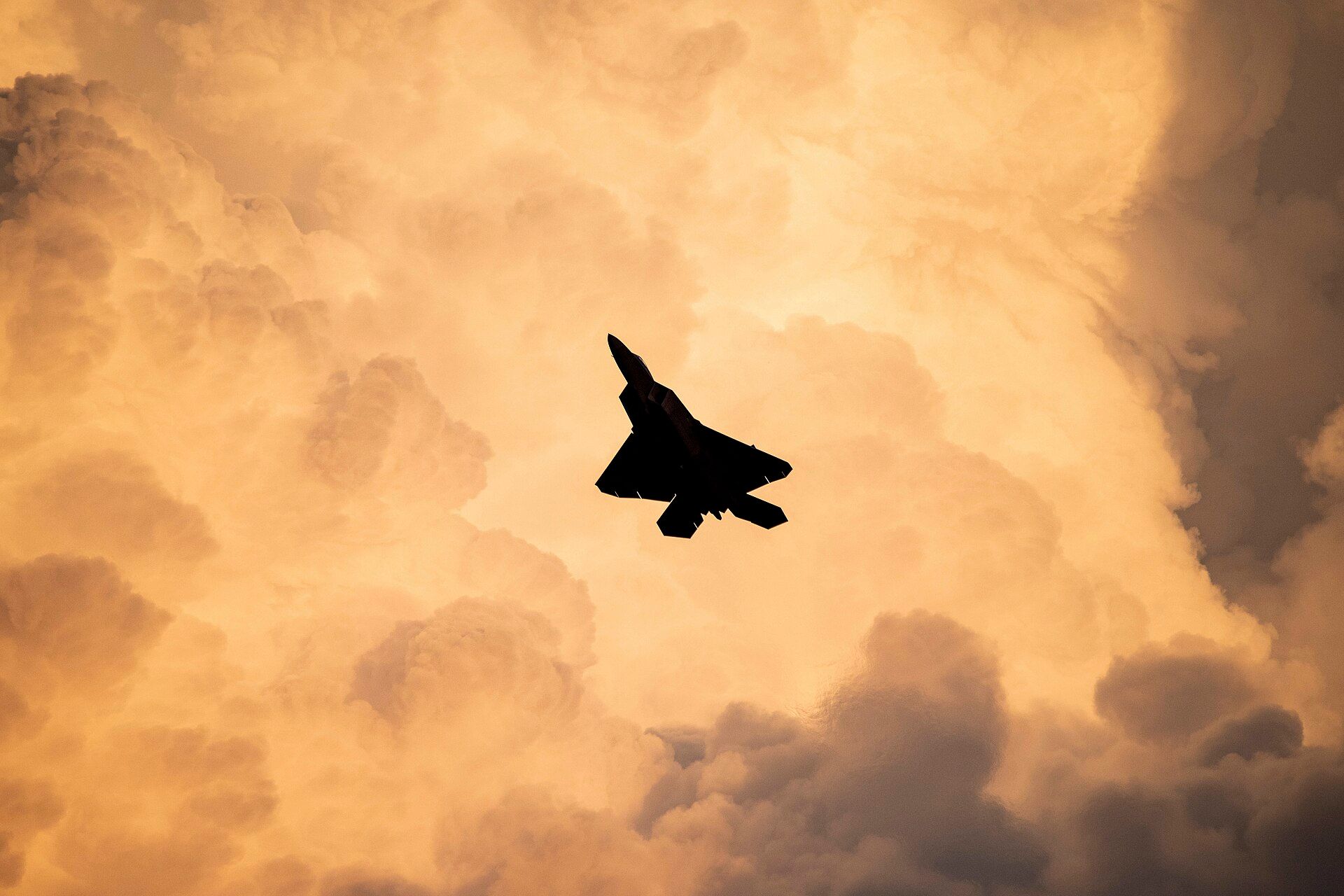
More than two decades after it entered service, the F-22 Raptor remains the gold standard by which every stealth fighter is judged. Its combination of supercruise, thrust-vectoring agility and low observability has never been fully matched, and a large part of that reputation rests not on its airframe geometry but on the delicate, labor-intensive coating that wraps it. That coating, and the vast support apparatus behind it, is precisely what makes the Raptor so difficult to copy.
The background matters here. The F-22 was conceived during the Cold War as the Advanced Tactical Fighter, a machine intended to penetrate dense Soviet air defenses. Low observability was a founding requirement, not an afterthought, and the aircraft's shaping and materials were designed together from the outset. The radar-absorbent material, or RAM, applied to the Raptor is not a single paint but a layered system engineered to absorb and scatter radar energy across specific frequency bands. It works in concert with the aircraft's faceted edges, edge treatments and engine inlet design. Remove any one element and the signature degrades.
The key facts are instructive. The F-22's coating is among the most effective fielded anywhere, yet by American standards it is now aging. Maintaining it is famously demanding: the aircraft requires climate-controlled hangars, careful handling and periodic reapplication, and each jet's coating is inspected and repaired with a level of craftsmanship closer to aerospace composites than to conventional painting. The materials involved, and the processes used to cure and bond them, were developed over years by a tightly held supplier base. Much of that know-how is tacit, residing in technicians and process documents rather than in any purchasable catalogue.
That is the crux of the replication problem. A competitor can photograph the Raptor, measure its planform and reverse-engineer its shape. What it cannot easily do is reproduce the industrial ecosystem: the specialty chemicals, the curing regimes, the quality-control culture, the maintenance infrastructure and the decades of accumulated data on how the coating behaves in rain, salt, heat and high-G maneuvering. Stealth coatings are not commodities. They are systems, and systems are copied far more slowly than shapes.
The industry implications are significant. For allies and partners pursuing fifth-generation aircraft, the lesson is that low observability is as much a sustainment challenge as a design one. Several programs have discovered that fielding a stealthy airframe is only half the battle; keeping it stealthy across a service life requires hangars, trained crews, spare materials and a supply chain that few nations can assemble. This is one reason export versions of stealth aircraft often differ from domestic ones, and why sustainment costs can rival acquisition costs.
For the United States, the Raptor's coating is both an asset and a cautionary tale. The Air Force has invested heavily in more durable, easier-to-maintain coatings for newer platforms, learning from the F-22's high-touch upkeep. Yet the Raptor's effectiveness endures, and its coating remains a benchmark that adversaries study closely. The gap between knowing what a coating does and being able to produce and sustain it reliably is where the real advantage lives.
The outlook is a story of gradual erosion rather than sudden obsolescence. As counter-stealth sensing improves and as newer materials mature, the F-22's signature advantage will narrow. But the deeper barrier, the industrial and human expertise required to build and maintain such coatings at scale, will persist far longer than any single material formulation. That is why the Raptor's coating will remain nearly impossible to replicate: the secret is not merely in the chemistry, but in the decades of institutional knowledge that surround it.
Comments (0)
No comments yet. Be the first to share your thoughts.