 Sky
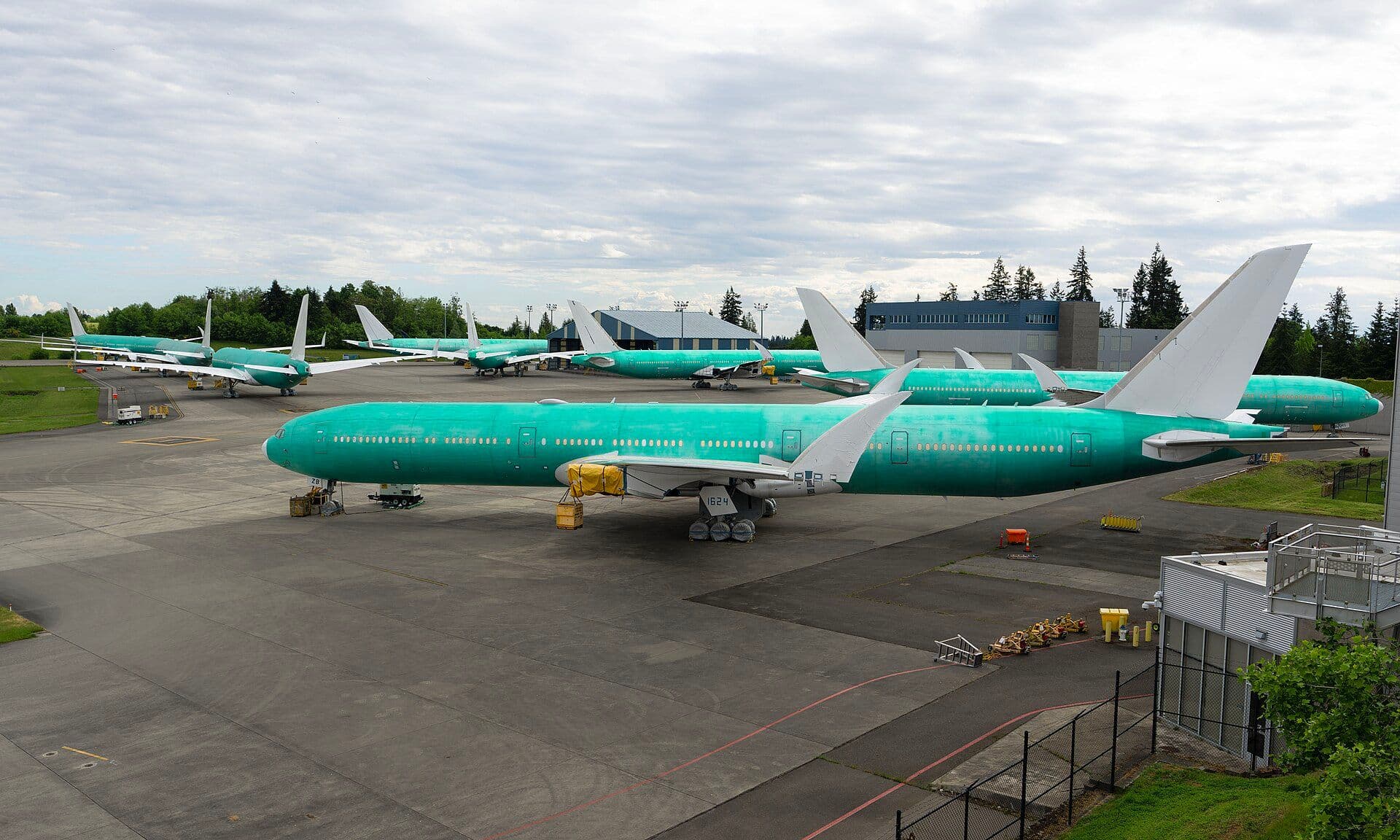
Boeing's 777 has quietly held one title for three decades: it is the widest twin-engine airliner in commercial service. With a fuselage measuring about 6.2 metres across, the 777 has been wider than every rival twinjet since its entry into service in 1995 — including the Airbus A350, whose roughly 5.96-metre cross-section is narrower by a clear margin.
That reality is easy to lose in the headlines. The 777X, Boeing's long-delayed next-generation twinjet, is frequently described as though it is about to overtake the A350 for the widest-twinjet crown. In truth, the crown never left Boeing. What the 777X actually does is refine the 777 family's existing width advantage for a new generation.
The numbers make the distinction plain. The A350's 5.96-metre fuselage was sized for nine-abreast economy in a 3-3-3 layout — a comfortable, modern standard that has made it a favourite of Qatar Airways, Singapore Airlines and Delta. The 777, by contrast, has always offered more: roughly 6.2 metres of external width, which since 2015 has allowed many airlines to fit ten-abreast economy in a 3-4-3 configuration. Emirates introduced that layout on the 777, and it has since become common across the long-haul fleet, if often criticised for its narrower seats.
The 777X keeps that roughly 6.2-metre cross-section but improves what airlines can do with it. Boeing thinned the cabin sidewalls, so the 777X's interior width grows to about 5.97 metres — wider inside than the 777-300ER's 5.87 metres — giving ten-abreast seating a touch more shoulder room. Paired with the new GE9X engines and folding wingtips, the 777X is less a claim to a new title than an update to one Boeing has held since the 1990s.
The accurate framing, then, is this: the 777X does not overtake the A350, because the A350 was never the widest twinjet. It extends the 777 family's long-standing width advantage — and for airlines weighing ten-abreast economics against passenger comfort, that is where the real story lives.