 Sky
Sky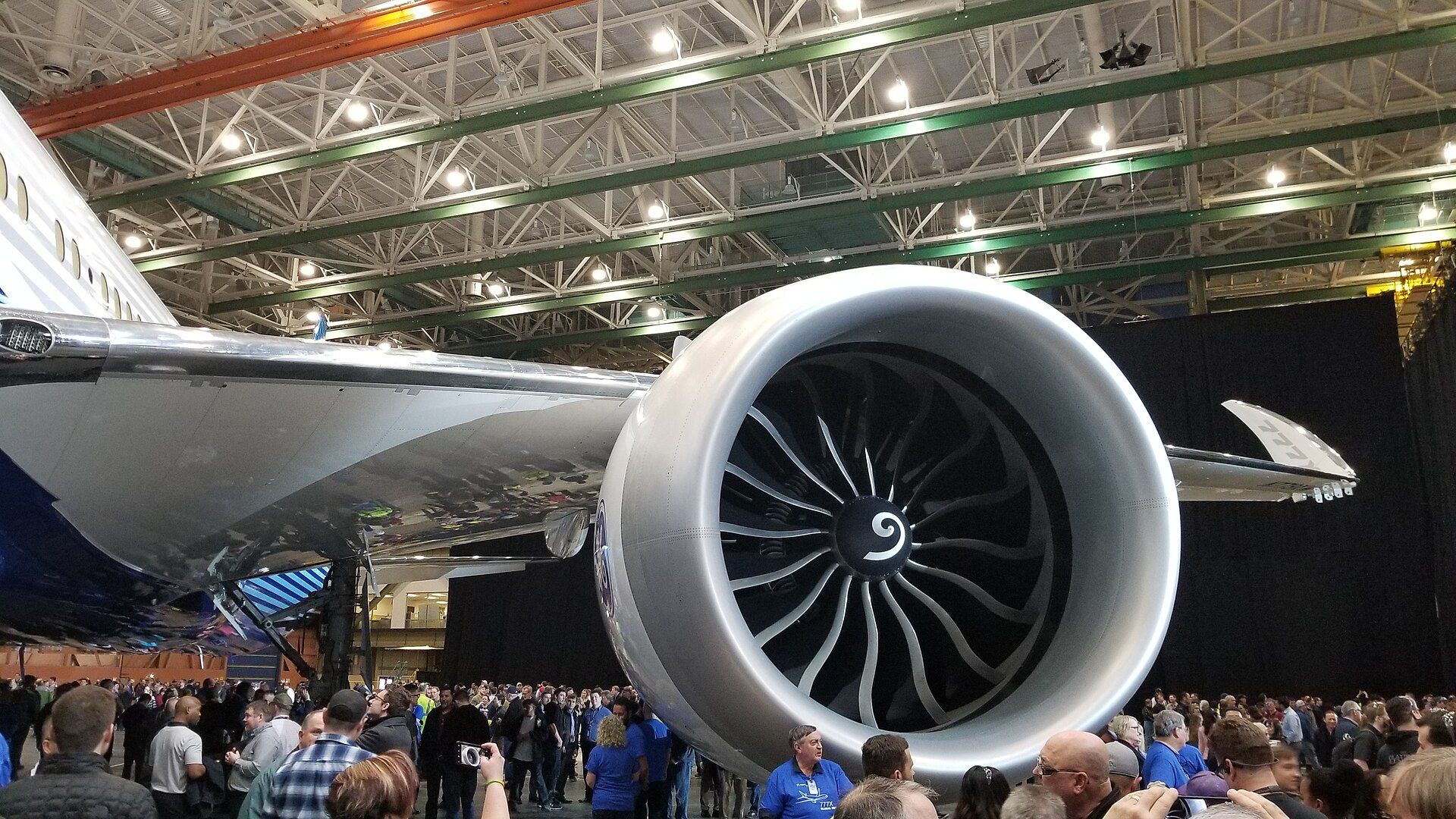
The widebody duopoly has rarely been as closely watched as it is today. Boeing's 777X and Airbus's A350 sit at the top of the long-haul market, and both owe their efficiency claims to a single component: the engine. General Electric's GE9X and Rolls-Royce's Trent XWB are the powerplants at the heart of this competition, and while both promise substantial fuel savings over their predecessors, they arrive at that goal through markedly different design choices.
The background here matters. When Boeing launched the 777X in the mid-2010s, it needed an engine that could deliver double-digit efficiency gains while lifting a heavier airframe. GE responded with the GE9X, which is the largest commercial turbofan ever built, with a fan diameter of roughly 134 inches. That enormous fan moves an unprecedented volume of air at a relatively low pressure ratio, a strategy that improves propulsive efficiency. The engine also introduced ceramic matrix composites into the hot section and relies on a very high bypass ratio to keep fuel burn and emissions down.
Rolls-Royce took a different route with the Trent XWB. Designed exclusively for the A350, the engine was conceived as a three-shaft architecture, a Rolls-Royce hallmark that allows each spool to run at its optimal speed. The Trent XWB is not the largest engine in its class, but it is among the most finely tuned. It entered service in 2015 and has since accumulated a strong operational record, with variants covering the A350-900 and the longer A350-1000. Its bypass ratio is lower than the GE9X's, but the three-shaft layout and iterative improvements have kept it competitive on fuel burn and durability.
The key facts underscore how differently the two engines approach the same problem. The GE9X produces in excess of 100,000 pounds of thrust and is built around a single, massive fan and a two-stage high-pressure turbine. The Trent XWB delivers thrust in the 84,000 to 97,000-pound range depending on the variant, and its three-shaft design separates the fan, intermediate, and high-pressure sections for greater aerodynamic flexibility. Both engines incorporate advanced materials and cooling technologies, but GE leans heavily on scale and composite fan blades, while Rolls-Royce emphasizes architectural precision and service maturity.
The industry implications are significant. For airlines, engine choice is increasingly a fleet-level decision tied to maintenance networks, spare parts logistics, and long-term cost predictability. The GE9X gives Boeing a powerplant that supports the 777X's size and range ambitions, but its sheer scale raises questions about ground clearance, airport infrastructure, and maintenance complexity. The Trent XWB, by contrast, benefits from a decade of in-service experience and a broad installed base across the A350 family, which gives operators confidence in reliability and turnaround times.
There is also a competitive dimension beyond the two airframers. Engine manufacturers are locked in a long game over aftermarket revenue, and the durability of these powerplants will determine which platform wins favor with lessors and cargo converters. The GE9X's entry into service with the 777X has been delayed alongside the aircraft itself, while the Trent XWB has already proven itself in high-utilization long-haul operations. That head start matters when airlines weigh the risks of a new airframe-engine combination.
Looking ahead, the contest will not be settled by thrust or fan diameter alone. The next battleground is sustainability. Both engines are compatible with sustainable aviation fuel blends, and both manufacturers are investing in further efficiency improvements. The GE9X's architecture leaves room for incremental gains, while Rolls-Royce is already charting a path toward the UltraFan demonstrator, which could inform future Trent developments. For now, the GE9X and Trent XWB represent two credible answers to the same question, and the market will ultimately decide whether brute scale or refined architecture delivers the better long-term economics.
Comments (0)
No comments yet. Be the first to share your thoughts.