 Sky
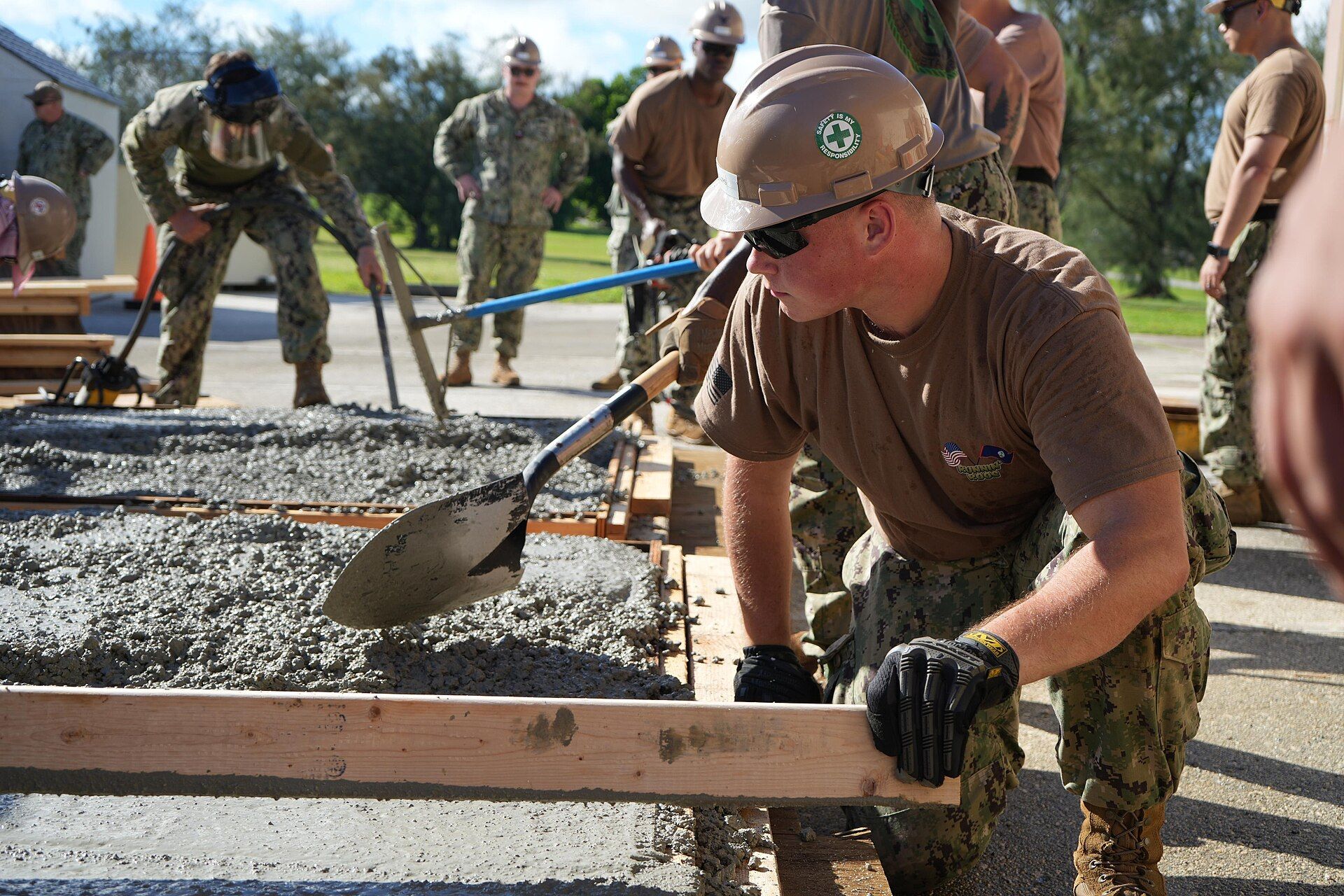
The United States Air Force is embarking on a significant infrastructure expansion at Andersen Air Force Base in Guam, pouring approximately 20 acres of new concrete apron space to accommodate additional aircraft. Yet the project has drawn scrutiny because it does not include hardened aircraft shelters, a decision that cuts to the heart of how Washington intends to protect its air power in the Western Pacific. The contrast between more parking space and fewer protective structures is not a bureaucratic footnote; it is a strategic signal about how the Pentagon views the future of conflict in the region.
Andersen AFB occupies a singular place in American military planning. Situated on the northern tip of Guam, it offers deep-water access, long runways, and a location roughly 1,500 miles from potential flashpoints in the Taiwan Strait and the South China Sea. For decades it has served as a rotational hub for bombers, tankers, and fighters, and it remains one of the few Western airfields in the Pacific capable of supporting sustained heavy operations. Its importance has grown as the Pentagon pursues its strategy of dispersed operations and agile combat employment, concepts designed to complicate an adversary's targeting calculus.
The new concrete work is best understood as a capacity play. Additional apron space allows more aircraft to be parked, serviced, and turned around simultaneously, easing bottlenecks that would emerge during a surge. In practical terms, it means Andersen can host a larger footprint of fighters and support aircraft, whether deployed from the continental United States, allied partners, or rotational units. That is a meaningful investment in sortie generation, the lifeblood of any air campaign.
But the absence of hardened shelters is the more revealing detail. Hardened aircraft shelters, or HAS, are reinforced structures designed to protect parked aircraft from blast, fragmentation, and near-miss attacks. They were a fixture of Cold War airfields in Europe precisely because planners assumed airbases would be targeted early and often. In the Pacific, the calculus is more demanding. Guam lies within range of a growing array of ballistic and cruise missiles fielded by potential adversaries, and analysts have long warned that Andersen's concentrated parking areas present an attractive target set.
Critics argue that pouring concrete without building shelters is akin to widening a driveway while leaving the cars uncovered. Proponents counter that hardened shelters are expensive, slow to build, and may not be survivable against modern precision weapons anyway. Instead, the Air Force has leaned toward dispersal, rapid runway repair, and mobile support concepts, betting that spreading aircraft across multiple locations is a better defense than hardening any single one. The concrete expansion fits that logic: more parking space supports dispersal within a single large base, and can accommodate aircraft arriving from other fields.
There is also a political dimension. Guam is a US territory with a substantial civilian population and a sensitive relationship with the military presence. Large-scale construction projects bring environmental reviews, local consultation, and cost scrutiny. Hardened shelters, which are visually imposing and require significant land, can attract more public attention than apron paving. The decision to prioritize concrete may reflect budgetary and political pragmatism as much as operational doctrine.
Industry implications are considerable. Construction firms specializing in military airfield work stand to benefit from the apron project, while the absence of shelter construction leaves a potential market untapped. For allied air forces in the region, particularly Japan and Australia, the Guam model offers a template: invest in throughput and dispersal rather than fixed protection. Aircraft manufacturers and logistics providers also watch closely, because basing capacity shapes deployment patterns for fighters, tankers, and cargo aircraft.
The strategic outlook is mixed. The concrete expansion will make Andersen more capable in peacetime and during the early phases of a crisis, enabling faster force buildup and more flexible operations. But if conflict erupts, the base's vulnerability remains a concern. The Air Force appears to be betting that mobility, redundancy, and active defenses will offset the lack of hardened shelters. Whether that bet holds under missile attack is a question that no amount of concrete can answer on its own. For now, Guam's newest apron is a statement of intent: more aircraft, more sorties, and a willingness to accept risk in exchange for agility.
Comments (0)
No comments yet. Be the first to share your thoughts.