 Sky
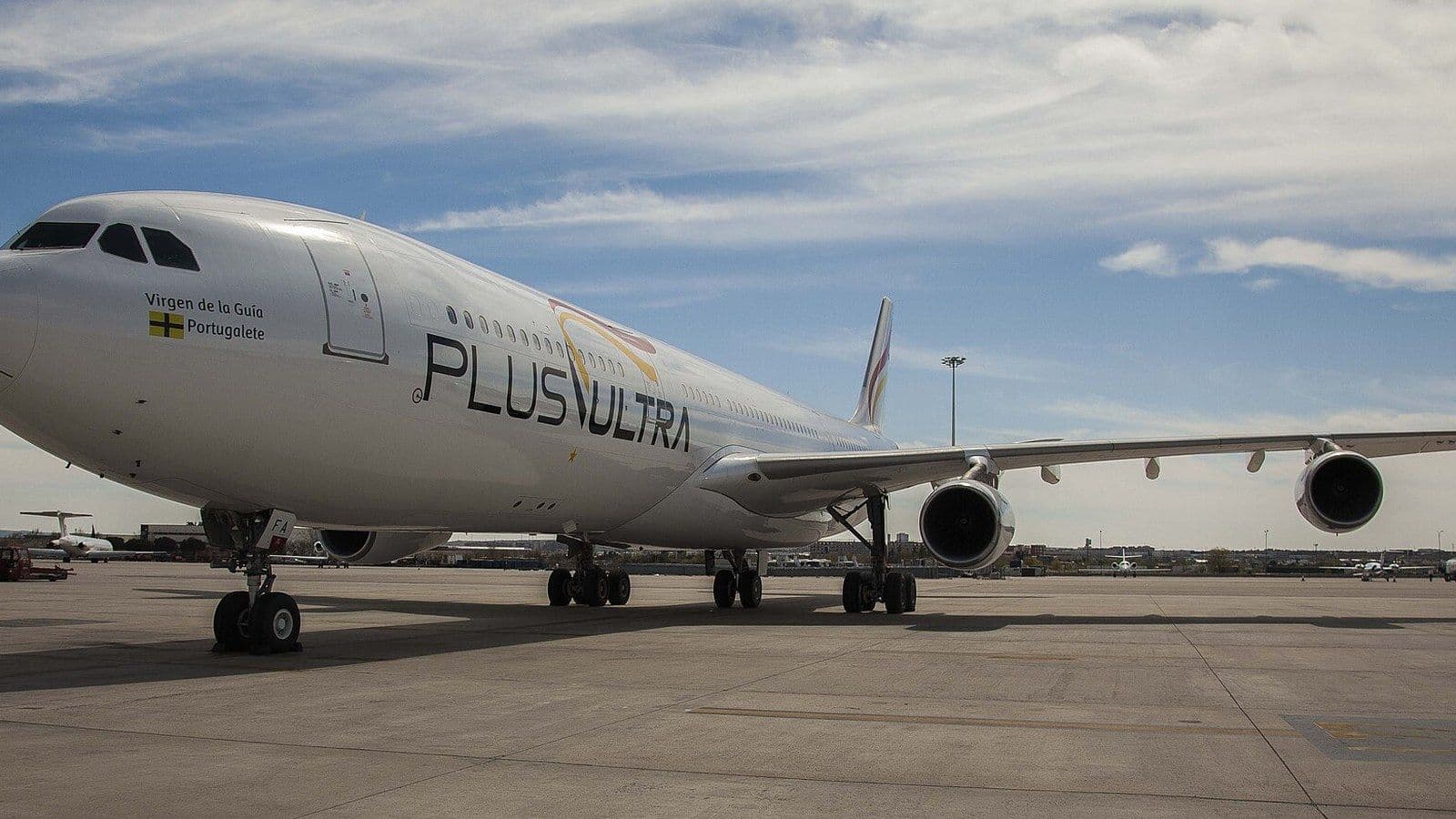
Spanish long-haul carrier Plus Ultra Líneas Aéreas has moved to shield itself from creditors while it prepares a sweeping restructuring, in the clearest sign yet that the Madrid-based operator's ambitious intercontinental strategy has run into serious financial turbulence. The airline has filed for preliminary creditor protection—a mechanism under Spanish insolvency law that gives a company breathing room to negotiate with lenders before formal proceedings—and has simultaneously withdrawn the bulk of its route network, a combination that points to a fundamental rethinking of its business model rather than a temporary hiccup.
Plus Ultra occupies an unusual niche in European aviation. Founded in 2011, the carrier built its identity on long-haul connections between Spain and Latin America, operating routes that larger flag carriers had either abandoned or never fully developed. Its fleet of Airbus widebodies—principally A330s and A340s—became a familiar sight at Madrid-Barajas, linking the Spanish capital with destinations such as Lima, Bogotá, Quito and Caracas. For a time, the model appeared to work: the airline tapped into strong VFR (visiting friends and relatives) demand and ethnic travel flows between Spain and South America, segments that legacy carriers served only partially.
But the long-haul, low-density model is among the most fragile in commercial aviation. Widebody aircraft carry high ownership and maintenance costs, fuel burn is substantial, and the routes Plus Ultra favoured are long, thin and exposed to currency volatility, political instability in destination markets, and intense price competition from both European and Latin American rivals. When demand softens or financing costs rise, there is very little cushion. The decision to seek creditor protection suggests that cushion has now been exhausted.
The withdrawal of most routes is significant because it strips the airline of the revenue base it would need to trade its way out of trouble. In restructuring terms, this is often a prerequisite for a viable plan: an operator cuts loss-making flying, preserves a core of cash-generative services, and renegotiates lease, supplier and labour obligations. The question is whether Plus Ultra can identify a defensible core at all, or whether the route cuts are effectively a controlled retreat.
The implications extend beyond one carrier. Europe's long-haul sector has become increasingly polarised between mega-carriers with global networks and lean leisure operators with tightly controlled costs. Mid-sized, niche long-haul airlines occupy an uncomfortable middle ground, lacking both the scale advantages of the majors and the cost discipline of the charter specialists. Plus Ultra's difficulties will reinforce a view among analysts and investors that this middle tier is structurally challenged, particularly in a market where capacity has returned aggressively post-pandemic and fare pressure is intense on leisure-heavy routes.
There are also knock-on considerations for airports and consumers. Madrid's hub status depends on a diversity of operators, and the loss of Latin American connections reduces choice for travellers who relied on direct services. Airports that benefited from Plus Ultra's presence may need to recalibrate their route development strategies. Lessors and suppliers, meanwhile, will be watching closely: preliminary creditor protection typically triggers negotiations over aircraft leases and payment terms, and the outcome will be read as a signal about how flexible the leasing market is prepared to be with distressed European operators.
For passengers, the immediate practical concern is disruption. Route suspensions can strand ticketed travellers, and the credibility of any restructuring will depend on how the airline handles refunds, rebooking and communication. Reputational damage at this stage can be as damaging as the financial position itself.
Looking ahead, Plus Ultra faces a narrow path. A successful restructuring would require a credible downsizing plan, agreement with creditors and lessors, and a route portfolio that can be operated profitably with a smaller fleet. That is achievable in principle—several carriers have used insolvency frameworks to emerge leaner—but it demands speed and clarity. If negotiations drag, or if the remaining network fails to generate sufficient cash, the preliminary filing could prove the opening chapter of a much deeper crisis. For now, the airline's long-haul ambitions are on hold, and the Spanish market is left to absorb the loss of another independent intercontinental operator.