 Sky
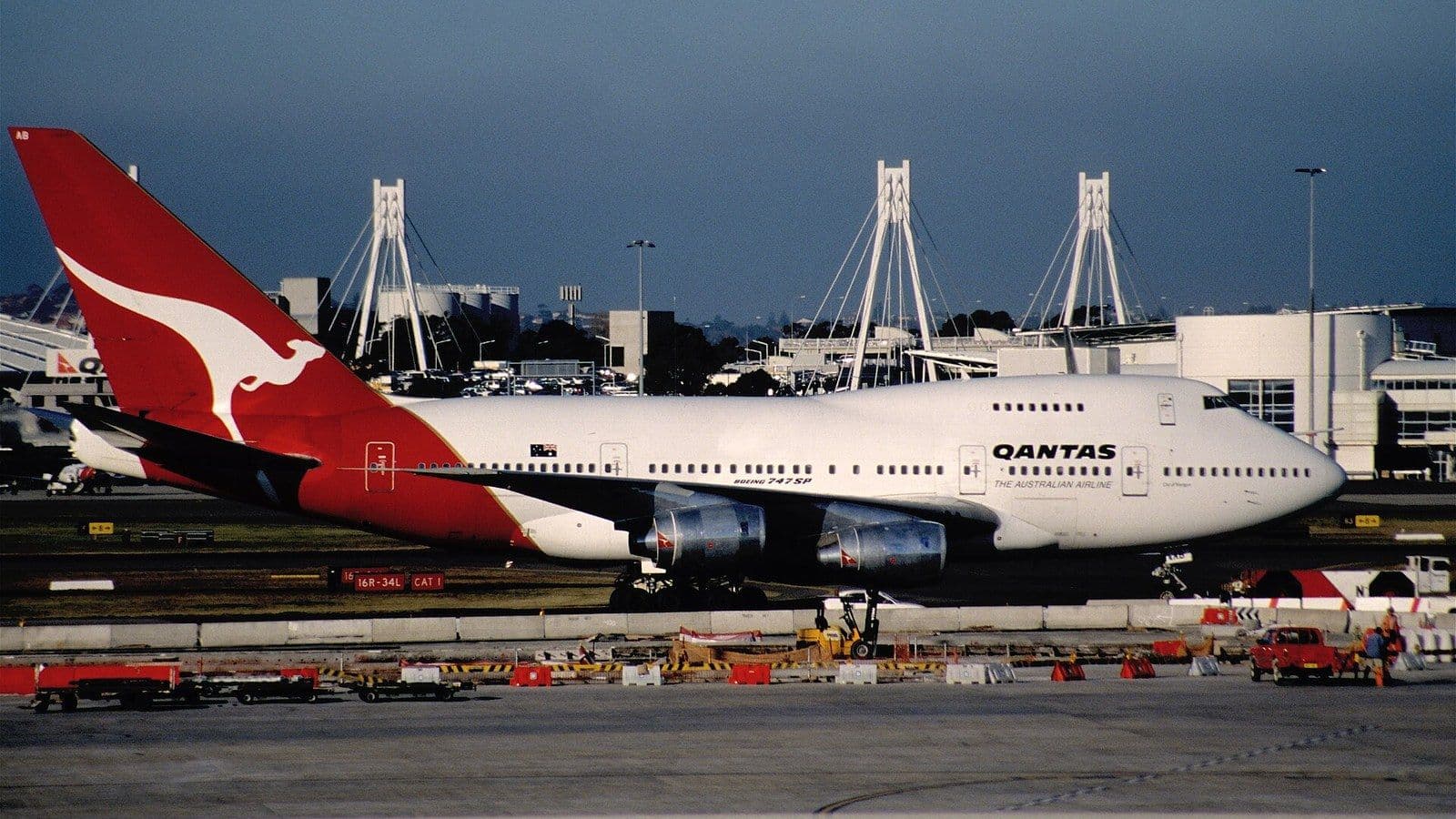
Wellington International Airport has long occupied a peculiar place in commercial aviation. Sitting on an isthmus between a harbour and steep hills, its single runway offers little room for error and even less room for expansion. For decades, the New Zealand capital's geography has dictated which aircraft can serve it and which cannot. It is against this backdrop that one of Boeing's most curious creations, the 747SP, found an unlikely and largely forgotten niche with Qantas.
The 747SP, or Special Performance, was Boeing's answer to a specific market problem in the mid-1970s. Airlines wanted ultra-long-range capability for routes such as New York to Tokyo, but the standard 747-100 and -200 carried more capacity than those thin, long-haul markets could support. Boeing's solution was radical in its simplicity: shorten the fuselage by roughly 14 metres, remove a section of the upper deck, and simplify the wing's trailing-edge flaps. The result was a jumbo that was lighter, structurally stiffer and capable of exceptional range, albeit at the cost of around 45 fewer seats in typical layouts.
What mattered most for Wellington, however, was not range but field performance. A shorter fuselage and a modified wing gave the 747SP markedly better takeoff and landing characteristics than its larger siblings. It could operate from runways that would have been marginal or off-limits to a standard 747, while still offering the economics and comfort of a widebody. For an airport hemmed in by terrain and water, that combination was decisive.
Qantas was among a small group of operators that saw value in the type. The airline's 747SP fleet, though modest, allowed it to connect Australia and New Zealand with markets that could not justify a full-size jumbo. The Wellington capability became a quiet point of difference, demonstrating that the aircraft's 'special performance' label was not merely a marketing flourish but a genuine operational attribute. Where other widebodies would have been payload-limited or simply unable to operate, the SP could do so within acceptable margins.
The wider significance lies in what the episode reveals about the relationship between aircraft design and airport infrastructure. Wellington's constraints are not unique; airports from London City to Santos Dumont face comparable geometric limits. Airlines have historically solved such problems either by deploying specialised aircraft or by accepting smaller equipment. The 747SP represented the former approach: a bespoke engineering answer to a localised operational puzzle. It is a reminder that fleet planning is rarely only about seat counts and fuel burn; it is also about matching airframe geometry to the physical realities of the airports an airline must serve.
There is also a historical irony worth noting. The 747SP was never a commercial triumph. Only 45 were built, and its niche was steadily eroded by twin-engine aircraft such as the 767, the A310 and later the 777, which offered comparable range with far lower operating costs. Yet the very characteristics that made it a poor seller, its shortened fuselage and compromised capacity, made it invaluable in places like Wellington. The type's legacy is therefore less about sales figures than about the routes it made possible.
For Qantas, the 747SP years formed part of a broader era in which the jumbo was the backbone of long-haul travel. As the airline transitioned to more efficient twins and eventually retired its 747 fleet entirely, the SP's Wellington role faded into aviation lore. Today, no 747SP operates scheduled passenger service, and Wellington's runway remains as constrained as ever, now served by narrowbodies and smaller widebodies.
Looking ahead, the lessons endure. Airport constraints will continue to shape fleet decisions, particularly as airlines weigh ultra-long-range twins against the physical limits of urban airfields. The 747SP story is a case study in how a manufacturer's willingness to tailor an airframe to a specific problem can create capabilities that outlast the commercial case for the aircraft itself. It is a small, specialised chapter in aviation history, but one that illustrates the enduring tension between engineering ambition and geographic reality.