 Sky
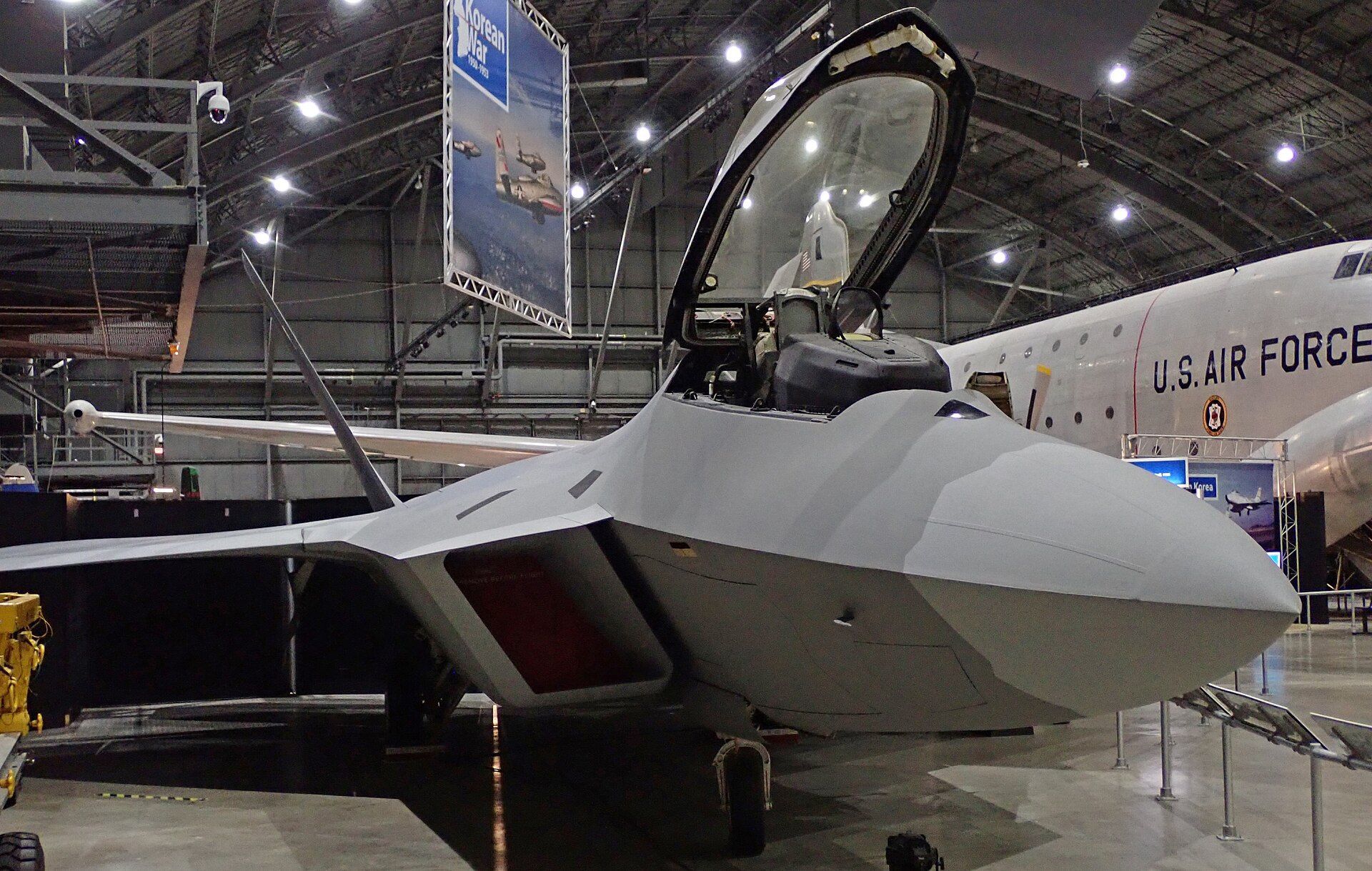
Few statistics in military aviation invite as much misunderstanding as the fuel economy of a fighter jet. When reports surface that the F-22 Raptor achieves roughly 0.30 miles per gallon while supercruising at Mach 1.5, the natural reaction is disbelief. A family sedan returns thirty times that figure. Yet the number, examined closely, is less a verdict on the Raptor's inefficiency than a window into the physics and doctrine that shape every modern air-superiority fighter.
Background matters here. Supercruise is the ability to sustain supersonic flight without engaging afterburners, and it has been a defining requirement of the F-22 program since the Advanced Tactical Fighter competition of the 1980s. The specification demanded a fighter that could dash to supersonic speed, remain there, and still retain fuel and weapons for combat. Legacy fighters such as the F-15 can exceed Mach 1 only with afterburner, a process that gulps fuel at rates that make sustained supersonic flight operationally impractical. The Raptor's two Pratt & Whitney F119 engines, each producing roughly 35,000 pounds of thrust with afterburner, were designed to deliver supersonic thrust in dry power, and that capability is the aircraft's signature advantage.
The key facts are straightforward. At supercruise speeds in the Mach 1.5 to Mach 1.8 band, the F-22 burns fuel at a rate that works out to approximately 0.30 miles per gallon. That figure derives from the aircraft's fuel flow at altitude, its internal fuel capacity of roughly 18,000 pounds, and the enormous energy required to push a heavily loaded airframe through the transonic and supersonic regime. For context, the Raptor's fuel consumption is often expressed in pounds per second rather than gallons per mile, and the underlying flows are measured in the tens of thousands of pounds per hour. The MPG framing is a translation for public audiences, and it flattens a great deal of nuance.
What the number actually tells us is more interesting. First, supersonic flight is dominated by wave drag, which rises sharply as an aircraft approaches and exceeds Mach 1. The F-22's stealth-oriented shaping, with its faceted surfaces and internal weapons bays, is optimized for radar cross-section reduction rather than aerodynamic slickness, and that shaping carries a drag penalty. Second, the Raptor carries its fuel internally to preserve stealth, forgoing external tanks that would compromise its signature. Third, the aircraft is designed to fight, not to loiter. Its mission profile involves short, violent bursts of supersonic maneuver followed by return to base or aerial refueling, not economical cruising.
Industry implications extend beyond a single airframe. The F-22's fuel burn underscores why aerial refueling is the backbone of modern air power. A supercruising Raptor is a thirsty aircraft, and tanker availability constrains how long and how far it can operate at speed. This dynamic shaped the Pentagon's thinking on the F-35, which trades supercruise for range and sensor fusion, and it informs the Next Generation Air Dominance program, where adaptive-cycle engines promise better fuel efficiency across the flight envelope. Engine makers such as Pratt & Whitney and GE Aerospace are investing heavily in variable-cycle technology precisely because the trade-off between supersonic performance and fuel burn remains the central engineering challenge of combat aviation.
The comparison to commercial aviation is instructive but misleading. An airliner at Mach 0.85 achieves well over 80 miles per gallon per passenger because it flies slowly, at high altitude, with high-bypass turbofans and wings optimized for lift-to-drag efficiency. A fighter at Mach 1.5 is operating in a completely different aerodynamic regime, with a thrust-to-weight ratio near or above one and a mission that prioritizes acceleration and agility over endurance. Judging the Raptor by miles per gallon is like judging a sprinter by fuel economy.
The outlook is one of evolution rather than obsolescence. The F-22 fleet remains in service with upgrades to sensors and weapons, and its supercruise capability is still unmatched among operational fighters in the West. Future platforms will likely achieve similar or better supersonic persistence with more efficient propulsion, but the fundamental physics will not change: speed costs fuel, and stealth costs drag. The 0.30 MPG figure is not an embarrassment. It is a precise measure of the price of air dominance, and a reminder that in combat aviation, efficiency is defined by mission accomplishment rather than miles traveled.
Comments (0)
No comments yet. Be the first to share your thoughts.