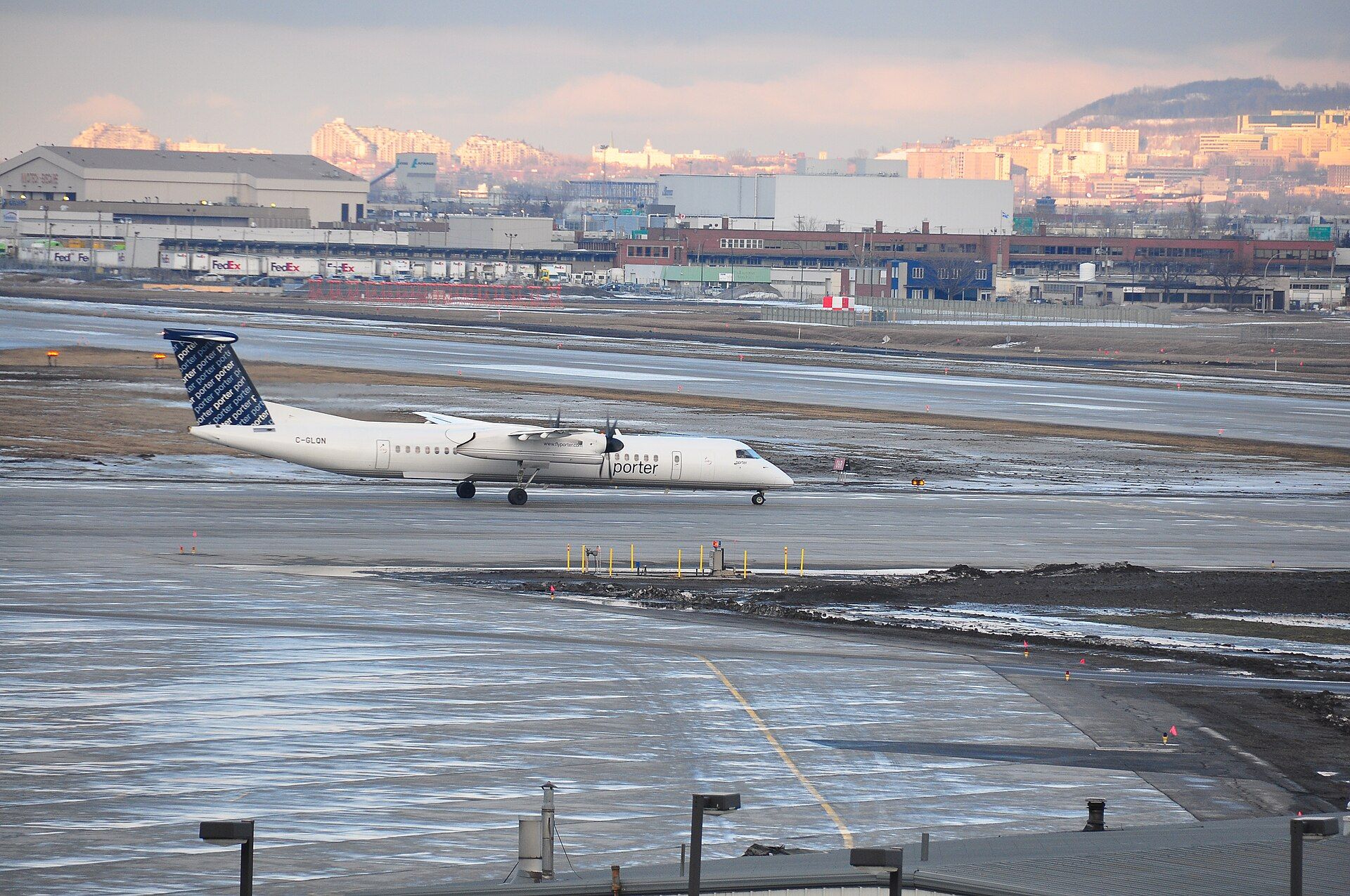
Montreal's aviation history is scarred by one of the costliest infrastructure gambles ever taken in Canada. Mirabel International Airport, opened in 1975, was conceived as a futuristic mega-hub that would eclipse Toronto and rival New York. Instead, it became a white elephant, hemorrhaging billions and ultimately closing to passenger traffic in 2004. The final bill, adjusted for inflation, is estimated at over $30 billion—a cautionary tale taught in business schools. Now, a new $450 million airport is rising in the city's east end, and its backers, led by Porter Airlines, are determined not to repeat that disaster.
The project, known as Montreal Saint-Hubert Airport (YHU), is undergoing a major transformation. Porter Airlines, a Toronto-based carrier that has aggressively expanded its network in recent years, is the anchor tenant and driving force behind a new terminal designed to handle up to four million passengers annually. The key difference from Mirabel? This airport is not chasing international glory. It is focused on domestic convenience, serving the Quebec market and connecting Montreal to other Canadian cities with speed and efficiency.
Mirabel's fatal flaw was its location. Situated 55 kilometers northwest of downtown Montreal, it was far from the population base and lacked adequate transportation links. Passengers balked at the long drive, and airlines eventually shifted back to Dorval (now Trudeau International). By contrast, Saint-Hubert is just 15 kilometers from downtown, on the South Shore, with easy access via Highway 30 and a planned extension of the REM light rail network. That proximity is a game-changer for short-haul travel.
Porter's strategy is equally pragmatic. The airline operates a fleet of De Havilland Dash 8-400 turboprops and Embraer E195-E2 jets, and it sees Saint-Hubert as a relief valve for Trudeau, which is slot-constrained and increasingly focused on international and transatlantic routes. By shifting domestic flights to YHU, Porter can offer lower fares, faster turnarounds, and a more seamless experience for travelers who don't need to connect through a mega-hub. The new terminal, scheduled to open in phases starting in 2024, will feature modern amenities but a modest footprint—no grandiose people-movers or cavernous halls.
The industry implications are significant. Canada's aviation market is dominated by Air Canada and WestJet, with Trudeau as the primary gateway. A successful second airport in Montreal could introduce genuine competition on domestic routes, particularly in the Quebec-Ontario corridor. It also aligns with a broader trend of secondary airports thriving by focusing on point-to-point leisure and business travel, much like London City or Toronto Billy Bishop. For Porter, which already operates from Billy Bishop in Toronto, Saint-Hubert is a natural extension of its downtown-to-downtown model.
However, challenges remain. Convincing travelers to use a secondary airport requires reliable ground transportation and consistent service. The REM extension to Saint-Hubert is not expected until the late 2020s, so early passengers will rely on buses and cars. Additionally, Porter must build awareness and loyalty in a market where Air Canada has deep roots. The airline's expansion has been ambitious, but it faces fleet delivery delays and intense competition.
Still, the contrast with Mirabel is stark. Where Mirabel was a top-down, government-led megaproject, Saint-Hubert is a private-sector-driven, incremental development. Porter and its partners are not betting on a radical shift in global aviation patterns; they are betting on the simple, enduring demand for convenient domestic travel. That modesty may be its greatest strength.
Looking ahead, the success of YHU will be watched closely by airport planners worldwide. If Porter can make a secondary airport work in Montreal—a city that has been burned before—it could pave the way for similar projects in other slot-constrained cities. The $450 million price tag is a fraction of Mirabel's boondoggle, and the focus on domestic convenience rather than international prestige is a lesson learned. For now, the ghost of Mirabel looms, but Porter Airlines is charting a different course, one that prioritizes passengers over vanity. The coming years will reveal whether that pragmatic approach can finally give Montreal the second airport it needs—without the $30 billion hangover.
Comments (0)
No comments yet. Be the first to share your thoughts.